
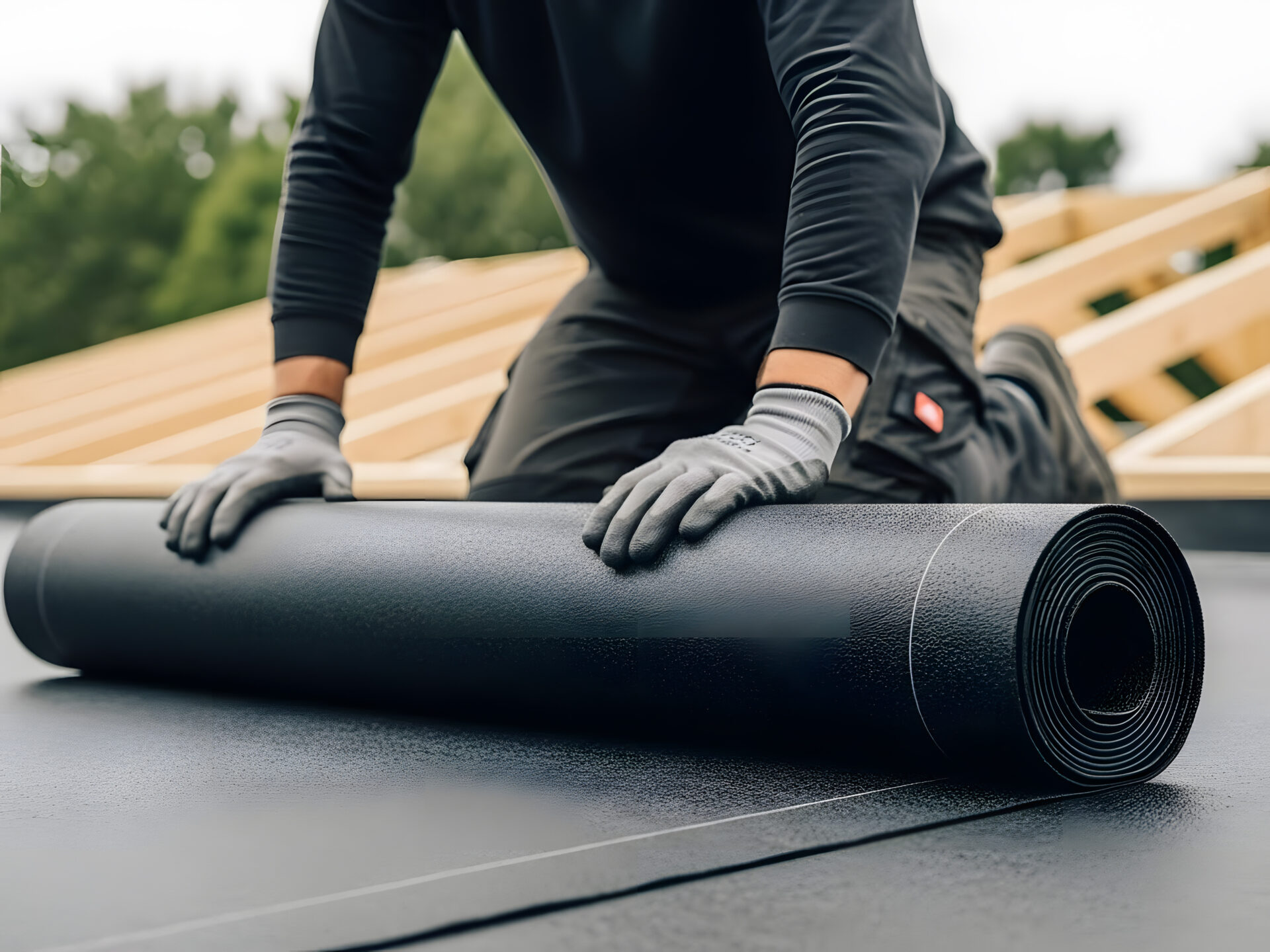
Choosing a covering for a flat roof involves more than picking a material that is described as durable or waterproof. The roof’s size, condition, drainage, exposure and adjoining details can all influence what will work in practice. EPDM is a familiar option, but it is only one part of a complete roofing system.
Homeowners researching EPDM roofing often encounter product kits, estimated lifespans and comparisons with felt or fibreglass. Those descriptions can be useful, yet they rarely explain why a particular roof is suitable or what can go wrong if the edges and outlets are poorly detailed. This article explains how EPDM membrane roofing is used, the main advantages and drawbacks, and the questions worth discussing before installation or replacement. The focus is on helping you make a considered choice, rather than assuming one material is right for every flat roof.
What Is EPDM Roofing?
EPDM stands for ethylene propylene diene monomer, a synthetic rubber used in flexible roofing membranes. In domestic roofing, it is commonly associated with flat and low-slope roofs, where a suitable membrane system forms the weather-resistant outer covering. Depending on the system and roof shape, membrane sheets may be bonded or secured by a specified method, with separate details for edges, corners, penetrations and drainage outlets. EPDM is a material, not a guarantee of quality: the supporting roof deck, preparation, compatibility of components and method of installation are equally important.
You may see EPDM described as rubber roofing or a single-ply membrane. Those terms help identify the material, but the performance of the completed roof depends on the particular manufacturer’s system. Some membranes are supplied in large sheets, reducing the number of field joints needed on a modest roof. Larger or more complicated areas may still need joins and carefully formed details. Roofs should also be designed to drain properly rather than relying on a membrane to compensate for poor falls or blocked outlets. Understanding the entire build-up, from the deck upwards, is more useful than comparing the visible membrane alone.
Where Is EPDM Roofing Suitable?
EPDM can be considered for various suitably designed domestic flat-roof areas, including some extensions, garages and other low-slope structures. The suitability of any individual roof depends on factors such as the deck material, intended use, existing insulation arrangement, drainage, edge conditions and the manufacturer’s requirements. An extension adjoining a house may have complex junctions that are very different from those on a freestanding garage. It is therefore sensible to establish how the new roof will meet walls, doors, parapets and drainage points before settling on a covering.
The condition of an existing roof is important too. A leaking roof may have damaged decking or insulation below its old surface, and simply covering it with a new membrane would not address that problem. The proposed system must be compatible with what remains, or the old covering may need to be removed so the structure can be assessed. Roofs that are frequently walked on or used as terraces introduce additional design questions and should not be treated like ordinary non-accessible roof surfaces. A professional assessment can also establish whether the roof needs changes to its falls, drainage or insulation as part of the work.
What Are the Advantages of an EPDM Roofing Membrane?
One appeal of EPDM is its flexibility. As a synthetic rubber membrane, it can accommodate normal movement within the limits of the specified system, which can be useful where temperatures and weather conditions vary across the year. Some installations use larger sheet sizes that reduce the number of joins across the open roof area. The finished surface also avoids the regular surface painting associated with some other external materials. These practical characteristics explain why EPDM is often included when flat-roof options are compared, though they should not be taken as evidence that any installation will be trouble-free.
A correctly specified EPDM roof can provide a weather-resistant covering with relatively straightforward routine care. However, much depends on the quality of the detailing, drainage and components used at roof edges and openings. The word “rubber” should not be confused with an ability to tolerate every condition indefinitely. Sharp objects, unsuitable products, poorly made joints and heavy or inappropriate traffic can all create problems. The useful benefit of a well-chosen membrane is its suitability within a sound roof design, not an automatic promise that repairs or maintenance will never be needed. Ask for product information relating to the proposed system rather than relying on claims about EPDM generally.
What Are the Limitations of EPDM Roofing?
Some of the greatest risks with membrane roofs arise at transitions rather than across broad, uninterrupted areas. Details around upstands, rainwater outlets, rooflights, corners and adjoining walls need particular attention. A membrane can be flexible yet still fail to keep water out if a junction is poorly formed or a fixing is unsuitable. EPDM products also differ in their adhesive systems, accessories and compatibility requirements. Combining components from different manufacturers without appropriate verification may create avoidable problems. In practical terms, installation competence and adherence to the chosen system matter as much as the membrane itself.
EPDM is not immune to mechanical damage. A dropped tool, sharp debris or work by another trade may puncture or disturb the covering. Although compatible repairs may be possible, a patch must be selected and applied according to the system specification. Poor drainage and standing water can make defects more disruptive and complicate inspection, even where the membrane material itself is designed for roof exposure. Appearance is another consideration: the colour and finished texture may not suit every property or design. These are reasons to assess EPDM realistically, not reasons to rule it out. A balanced comparison should account for the roof shape, use and maintenance access.
How Does EPDM Compare With Felt and GRP Flat Roofing?
Felt, EPDM and GRP are different roofing systems, and each has specific preparation and installation requirements. Modern felt roofs often use multiple reinforced bituminous layers and carefully formed joints, while EPDM generally uses a synthetic rubber membrane system. GRP, sometimes called fibreglass roofing, forms a resin-and-reinforcement covering installed under the conditions required by the chosen product. Their methods of dealing with edges, penetrations, movement and repairs can therefore differ considerably. It would be misleading to rank one as universally best without knowing the roof and the products being compared.
Consider the questions that affect your own property: how complicated is the roof shape, what is the substrate, where will rainwater drain, how will the covering meet a door threshold or adjoining wall, and how accessible will future repairs be? The installation circumstances can make one system more appropriate than another. A simple open garage roof and a roof with several skylights or difficult corners are not equivalent projects. Nor should cost be assessed from a membrane or kit price alone: preparation, insulation, decking, edge trims and safe access can all influence the completed job. This comparison is about selecting a suitable flat-roof covering, not repeating the broader question of whether a house should have a pitched or flat roof.
What Should You Consider Before Choosing an EPDM Roof?
Start by establishing what is already there and what the roof needs to do. Is the existing deck sound? Are the roof’s falls adequate? Will the outlet and guttering remove water as intended? Are there door thresholds, rooflights, parapets or neighbouring walls that complicate the detailing? Where insulation is being upgraded, the complete thermal and moisture-control arrangement should be considered rather than adding materials in isolation. Ask which exact EPDM system is proposed, whether it is suitable for the roof type and how the installer intends to manage joins and junctions. Product-specific installation and maintenance instructions are more valuable than a generic lifespan figure.
Once the options are understood, consider ongoing inspection and the possibility of future work near the roof. Keep outlets clear where this can be done safely and arrange competent attention if water begins entering the building or coverings become damaged. The HSE roof-work guidance is a useful reminder that roof access requires appropriate planning and safeguards. If you are evaluating a replacement or new flat roof, Riverside Roofing can discuss how the existing roof is constructed and whether EPDM is a sensible option alongside flat roofing approaches. Explain the area, any known leaks and the access conditions when you contact the team. The goal is to select an appropriate system for the building rather than choosing a covering from its headline description alone.