
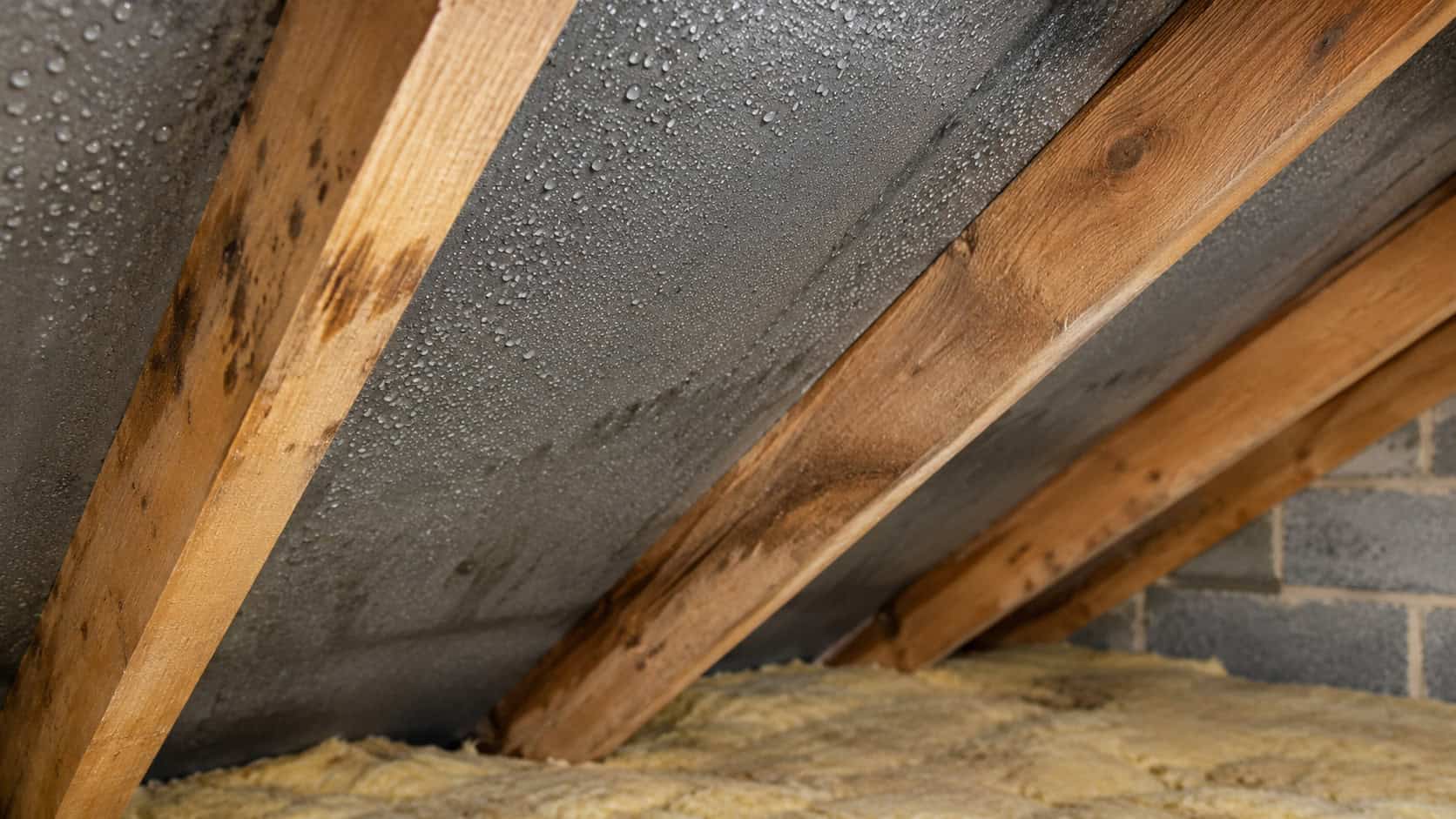
Condensation in a roof space can be confusing because the first signs may look similar to a roof leak. Droplets beneath the roof covering, damp insulation or a musty smell in the loft can all indicate that moisture is building up where it should not. The cause matters: condensation forms when moisture-laden air meets a cold surface, while a leak allows rainwater to enter through a defect in the roof. The two problems need different solutions and can sometimes occur together.
Understanding how moisture moves through a home can help you recognise warning signs and avoid changes that make the situation worse. Ventilation, insulation and the condition of the roof covering all play a part, but the right approach depends on the construction of the property.
What Causes Condensation in a Roof Space?
Everyday activities create water vapour inside a home. Cooking, showering, drying clothes and even breathing add moisture to indoor air. Some of that air can travel upwards through gaps around loft hatches, ceiling fittings, pipework and other openings. If it reaches a colder roof space, it cools. When the air can no longer hold the same amount of water vapour, moisture can form on cold surfaces.
In a typical cold loft, the underside of the roof covering, underlay and rafters may be much colder than the rooms below. This temperature difference can make condensation more likely, particularly during colder weather. It may appear as droplets beneath the underlay, damp patches on timber or moisture around stored items. The amount depends on indoor moisture levels, air leakage, the roof’s design and whether its ventilation arrangements are working as intended.
Condensation is not necessarily evidence that the roof covering is defective. It can develop even when tiles and other external materials are intact. However, persistent moisture should not be ignored. It may indicate that the balance between indoor moisture, insulation and ventilation needs attention. Different roof constructions use different underlays and ventilation arrangements, so there is no single remedy for every property.
How Can You Tell the Difference Between Condensation and a Roof Leak?
It can be difficult to distinguish condensation from a leak by looking at one damp patch alone. The pattern and timing of moisture can provide clues, but they do not prove the cause. Condensation may be more noticeable during cold weather and can affect several areas of a roof space. Homeowners might see droplets beneath the underlay, moisture on nails or fixings, or dampness that appears after a cold night rather than following a particular spell of rain.
A roof leak is more likely to produce a localised area of wetness associated with a defect in the external covering or a junction. Water may enter around damaged tiles, flashing, valleys or roof windows, then travel along timber or underlay before becoming visible indoors. A ceiling stain is not always directly below the point where rainwater entered. A leak may become more obvious during or after heavy rain, although timing can vary.
The distinction matters because improving ventilation will not repair damaged tiles or failed flashing, just as patching the roof covering will not necessarily resolve condensation. The two conditions can also occur together. If the source is unclear, do not assume every damp patch is condensation. A closer assessment of the roof covering, roof space and ventilation may be needed. Riverside Roofing’s existing guide to roof leak causes provides further context on how water can enter a property.
How Roof Ventilation Helps Control Moisture
Ventilation helps remove moisture from a roof space by allowing air to move through it. On some pitched roofs, this involves air entering near the eaves and leaving through suitable high-level vents. The precise arrangement depends on the roof’s construction, underlay and design requirements. The aim is not simply to make the loft as draughty as possible, but to provide an appropriate route for airflow where the roof design requires it.
Problems can arise if ventilation openings become blocked by insulation, stored belongings or later alterations. Loft work can unintentionally cover an eaves vent or restrict an air path. Homeowners should avoid pushing insulation tightly into ventilation spaces or storing items where they obstruct existing vents. However, adding vents at random is not a reliable fix. Intake and outlet ventilation need to work together, and the correct solution varies between roof types.
The National Federation of Roofing Contractors explains the importance of properly designed ventilation in pitched roof spaces, including the limitations of relying on retrofit lap vents alone. Its roof ventilation guidance is aimed at roofing professionals, but reinforces an important point: ventilation should be considered as part of the roof’s overall construction, not as an isolated accessory. If condensation continues despite clear vents, the cause may involve air leakage from the home, insulation details or the roof build-up itself.
How Loft Insulation Can Affect Roof Condensation
Loft insulation reduces heat loss from the rooms below, but it also changes temperatures and air movement within the roof space. In a conventional cold loft, insulation is usually laid at ceiling level, leaving the space above colder than the heated rooms. If warm, moist air escapes through gaps in the ceiling, it can meet cold surfaces and contribute to condensation. Insulation does not create moisture by itself, but changes to thermal conditions can make existing ventilation or air-leakage problems more noticeable.
The way insulation is installed matters. Material pushed into the eaves can restrict ventilation where an air path is required. Insulation that is compressed or laid unevenly may also perform less effectively. Loft hatches, ceiling penetrations and gaps around services can provide routes for warm air to enter the roof space. These details should be considered alongside the insulation rather than assuming that adding more material will solve every problem.
The Energy Saving Trust advises homeowners to consider ventilation when insulating a loft and to seek professional advice where there is already damp, a flat roof or a converted loft. Its loft insulation guidance explains why existing moisture problems should be understood before insulation work goes ahead. Different roof constructions need different approaches, so advice based on the actual building is preferable to copying a solution used elsewhere.
Can Persistent Condensation Damage Roof Timbers and Insulation?
A brief appearance of condensation does not automatically mean a roof has suffered lasting damage. The concern is prolonged or repeated moisture that does not have an opportunity to dry. If timber remains damp over time, conditions may develop that encourage fungal decay. Persistent dampness can also contribute to mould growth and affect materials stored in the loft.
Insulation can suffer if it becomes wet. Some materials lose effectiveness when damp, and wet insulation may take a long time to dry if the underlying cause is not corrected. If it is compressed or covered by stored belongings, airflow and drying may be further restricted. A musty smell, visible mould, damp patches on rafters or recurring droplets are reasons to investigate rather than simply wiping surfaces and waiting for warmer weather.
Visible condensation does not mean the roof structure must be replaced. The extent of any damage depends on how long moisture has been present, the materials involved and whether the roof space can dry between periods of condensation. Where timber appears discoloured, soft or persistently wet, a suitable professional should assess it. Finding and correcting the source of moisture is more important than treating visible symptoms alone.
What Can Homeowners Do to Reduce Roof Space Condensation?
Start by considering how moisture is managed throughout the home. Use kitchen and bathroom extractor fans where fitted, ensure they discharge appropriately and allow them to run for the recommended period after use. Vent tumble dryers outside where the appliance requires it. These steps can reduce indoor moisture, although they will not resolve a roof ventilation defect or a leak.
If the loft can be viewed safely from its access point, look for widespread droplets, damp insulation, blocked vents or stored items restricting airflow. Do not climb onto the roof, walk across unsupported ceiling joists, move insulation around electrical fittings or alter roof vents yourself. If you are unsure what you are seeing, leave the area undisturbed and arrange an assessment. Avoid adding insulation or applying spray foam over a damp roof before the cause is established.
Where moisture persists, the cause may involve indoor humidity, air leakage, ventilation, insulation, the roof covering or a combination of factors. An assessment may include checking the roof, underlay, ventilation, insulation and visible timbers. If there is evidence of water ingress, roof repair advice may be needed. Homeowners needing a broader assessment can also speak to experienced roofers.
Condensation is best treated as a moisture-management issue that needs a clear diagnosis. Ventilation, indoor moisture control and correctly installed insulation can all help, but the right combination depends on the roof. If dampness keeps returning, do not assume it will disappear when the weather changes. Establishing the cause early can help prevent avoidable damage.